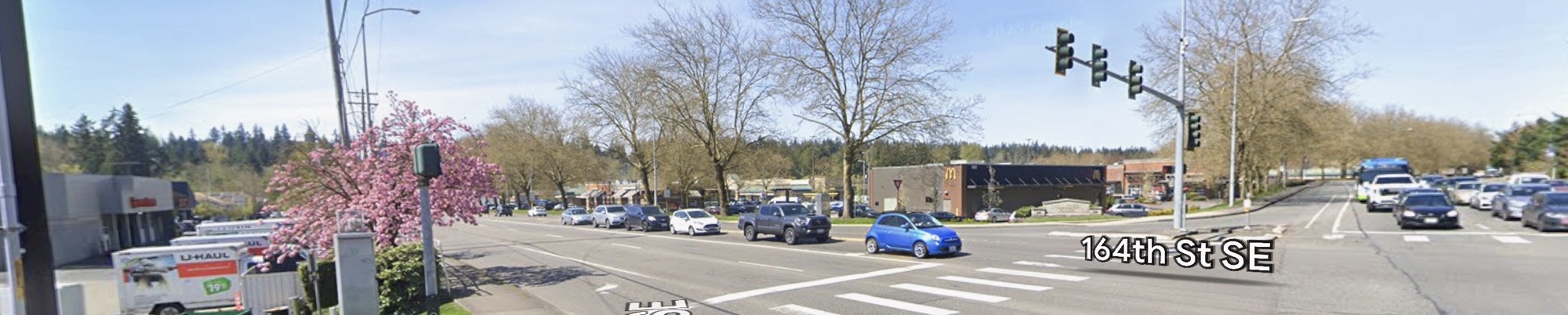

Mill Creek is planning to accommodate most of its mandated housing growth in the south town center subarea. The city is early on the planning process and has received the environmental review as it explores a variety of density options as it moves forward with redeveloping the parking lots that make up this part of the town. This subarea was added when the comprehensive plan was updated back in 2024.
While the subarea has already been upzoned to 60 feet (five stories), the city says that the subarea’s current regulations make it nearly impossible for the required redevelopment. The existing lower height maximum, high parking minimums, and open space requirements would make it too expensive with not enough revenue to pay the debt in build in Mill Creek. Despite the fact that the current regulations in the south town center make redevelopment unlikely, there is still significant infrastructure upgrades that are necessary that the city would be on the hook for without a substantial increase its tax base.
This means that the city’s best option to build out these infrastructure improvements in the subarea is to increase the density, while lowering barriers to building, so they don’t have to drastically increase taxes on the residents. The other benefit to increasing the density in the subarea is that it allows the city to build out the majority of its required housing and protect the character of existing neighborhoods.
These are the three option that the environmental impact study examined:
| Alternative No. 1 – No action | Alternative No. 2 – Higher density | Alternative No. 3 – Mixed density | |
|---|---|---|---|
| Maximum building height | 60 feet | 85 feet | 60 to 85 feet |
| Residential units | 3,225 units | 5,567 units | 4,270 units |
| Retail square footage | 113,242 sq. ft. | 233,447 sq. ft. | 149,383 sq. ft. |
| Population | 5,934 | 10,241 | 7,857 |
| Employment | 210 | 382 | 262 |
The three different options provide different levels of development, and affordability. With the Swift Green Line providing a one seat bus ride to Boeing and Canyon Park (eventually downtown Bothell), and the Orange Line providing a direct connection to the light rail at Lynnwood City Center; Mill Creek is well positioned to accommodate growth in a way that does not require a car for all of its new residents which would make parking reform and the higher density option would significantly benefit the city and Snohomish County.
It’s pretty clearly laid out in the EIS that if the city makes no changes to the south town center subarea, this will lead to individual redevelopment projects that comply with the missing middle housing laws passed in Olympia. That would mean that the city would be unable to enforce a unified vision because the existing code requirements in the subarea make it impractical for builders to invest in the subarea.
There is significant discussion about how the city has state and county requirements to meet in terms of its growth. Mill Creek has historically been a city that’s used its code to throttle development to prop up existing property values, which is acknowledge thought the EIS. If the city is going to be serious about tackling its affordability crisis, the higher density option is the way to go as that would help make it easier for more people to live near or on top of their shops, bars, restaurants, and jobs with easy transit connections to the rest of the region.
More from the Evergreen Post Intelligencer
- Sloppy defense doomed Cougars soccer to its first loss against Idaho since ’99

- Unincorporated Snohomish County to have $20 car tab in order to fund Public Works road repairs
- Lynnwood City Council approved the long-term water plan, critical area ordinance

- Snohomish County Council passed the 0.1% public safety sales tax
- LPD chief briefed the council on how the department will use the public safety grant, sales tax

- Union treasurer Burgess appointed to fill vacancy on Lynnwood PFD board

Discover more from Evergreen Post Intelligencer
Subscribe to get the latest posts sent to your email.
