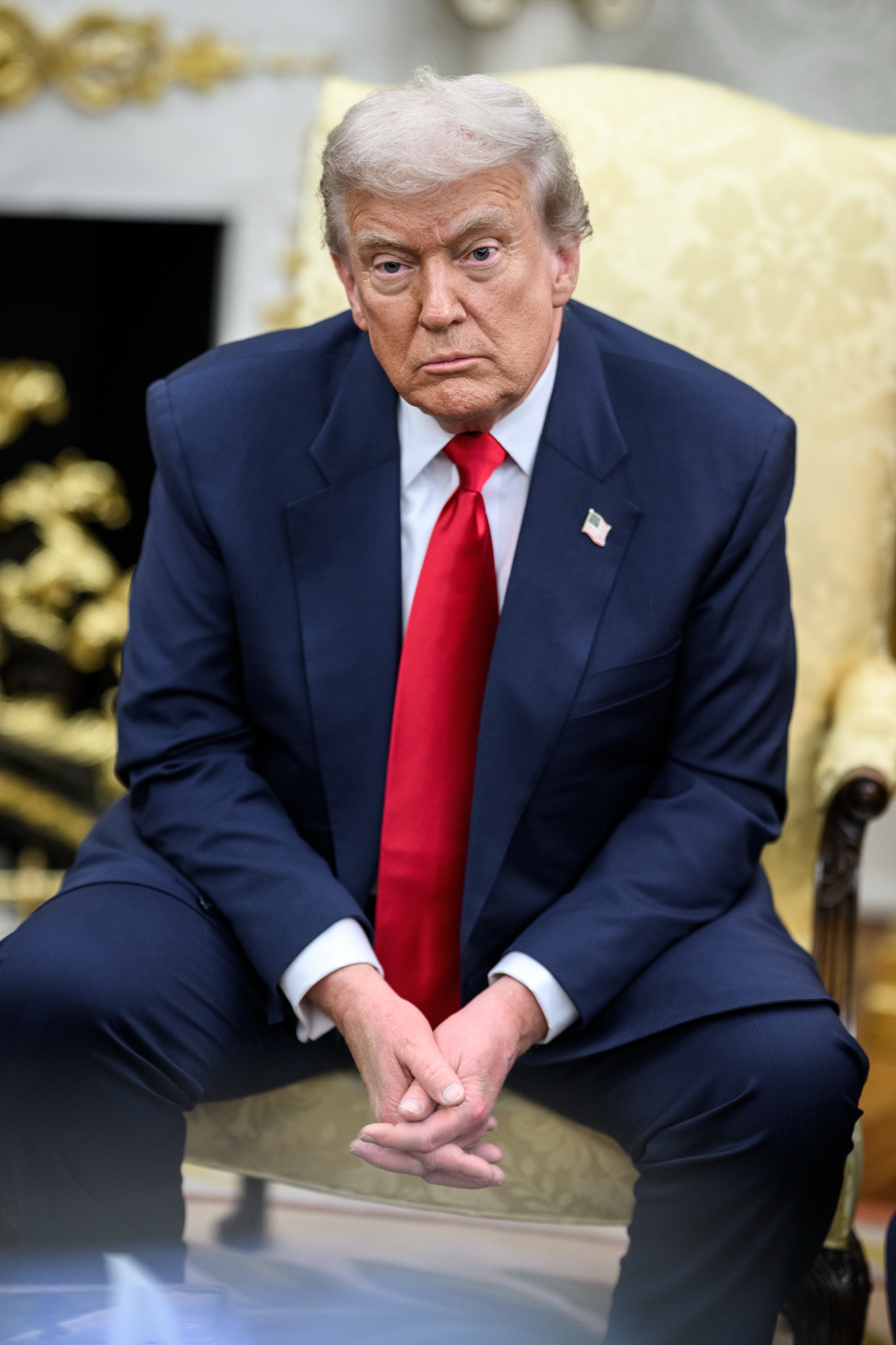

On Sunday night, president Donald Trump announced on Truth Social that a peace deal to end his illegal war in Iran had been reached. The Iranian Foreign Ministry confirmed that a deal had been reached and is expected to be formally signed on Friday in Switzerland. Despite the fact that the entire justification for the war was Iran’s proximity to achieving nuclear weapons, the memorandum of understanding between the United States and Iran does not include restrictions on their uranium enrichment or their ability to develop such weapons in the future; separate negotiations, and a separate deal, are required.
It’s a deal that has left Israeli politicians caught out because their staunchest ally in the American government just stabbed them in the back.
As part of the peace deal, a 60 day extension of the existing cease fire will commence to ensure there is time for negotiations around Iran’s nuclear weapons, ballistic missile programs, and Iranian government assets that are frozen in foreign accounts. If no new negotiations start within that time frame, the consequences are unclear; although Trump told the New York Times that he could resume strikes and turn the US into the Middle East’s guardian. That makes this one of the trickiest, if not dangerous, parts of this deal. A threat that could serve as a catalyst for Iran to build nuclear weapons anyway, that way Israel and the United States will have to think twice about any future military strikes on the country.
Trump’s peace deal also requires an end to Israel’s war with Hezbolah and its illegal invasion, occupation of Lebanon. This portion of the MoU has already generated significant backlash in the country from within prime minister Benjamin Netanyahu’s party, his coalition, and his opposition.
“[Trump] compelled Israel to accept an inconvenient ceasefire in Gaza, Lebanon, and Iran,” the commentator Nahum Barnea wrote in the centrist daily Yedioth Ahronoth. “Along the way, he demoted Israel from the status of an ally to that of a servant: one whose services are utilised but whose opinion is disregarded. Its role is to obey and to say thank you politely.” – James Shotter, Financial Times
Receive future updates from the Evergreen PI
Israel’s defense Minister Israel Katz has made it clear that the country will not withdraw from territories its ceased in Gaza, Syria, or Lebanon and that the Israeli Defense Force (IDF) is prepared to stay there indefinitely. Meanwhile, national security Minister Itamar Ben-Gvir has argued that the deal Trump signed with Iran does not bind Israel in anyway, despite the fact that Israel ending its war in Lebanon was a key tenant of the deal for the Iranian government.
If Netanyahu’s follows Ben-Gvir’s advice, the deal is dead before anyone sits down to discuss Iran’s nuclear program. There is also no indication how Iran will respond to a continued Israeli occupation of southern Lebanon or Gaza.
There is a very real possibility that the public statements from these two members of Israel’s coalition government have doomed the final peace negotiations before they get started. The Iranian government has made it clear that ending the war in Lebanon was one of their major objectives and Israel’s government has continued to disregard that even now with a potential end to the war in sight. Add in the fact that assets need to be unfrozen, and another nuclear deal needs to be struck with a country who’s currently at war with two countries armed with nuclear weapons – one of which has already walked away from an international effort to ensure Iran doesn’t get a nuke..it’s nearly impossible to see how this peace deal is any different than any of the other failed cease fires throughout this war.
How we got here
The American president has proven to be unreliable when it comes to Iran, at best. His decision to withdraw from the 2015 Joint Comprehensive Plan of Action in 2018 ultimately set us down this path because it meant that America did not ease financial restrictions and sanctions on the country as was required in the original plan; which meant that a significant amount economic relief provided by JCPOA to the Iranian people never came. Despite that, the Iranian government worked with the European Union to ensure that all remaining signatories stayed in compliance with the deal until 2025 when the Iranian Parliament was filled with hardliners in the most recent elections. Ayatollah Khamenei then started to publicily criticize the snapback provisions in the deal.
After Iran formally withdrew from JCPOA in February, 2025 the UN formally implemented the snapback sanctions across all sectors of the Iranian economy. This is what sparked the June, 2025 strikes against the country’s nuclear facilities by Israel and the United States. Strikes that were initiated because Iran was allegedly close to a nuclear weapon. Despite the fact that the International Atomic Energy Agency finding no proof that uranium had been enriched for anything but peaceful purposes – the IAEA was also unable to independently verify that Iran’s uranium enrichment was not for military purposes either.
Trump’s reckless behavior in his first term sparked the economic conditions in Iran that made the survival of the JCPOA untenable; yet Europe, the UN, and Iran tried to make it work for an entire decade. An effort that should be lauded, even if it was always doomed to fail.
Once the war had started, there had been multiple attempts by House Democrats to pass a war powers resolution that would have made it impossible for the president to continue his illegal war without congressional authorization. While a few Senate Republicans were on board from the start of the war, and had even passed a bi-partisan resolution back in February, there was not enough support among House Republicans until this past week when four Republicans defected to vote with every single Democrat to pass a war powers resolution; a few days prior, the Senate had passed a resolution 50-47 which directed the president to withdraw from the war.
This is the real reason that he pushed for a peace deal now. Congressional Democrats had worked with a handful of Republicans to force this president to end his illegal war and he needed to make it look like it was his decision.
More from the Evergreen Post Intelligencer
- Sloppy defense doomed Cougars soccer to its first loss against Idaho since ’99

- Unincorporated Snohomish County to have $20 car tab in order to fund Public Works road repairs

- Lynnwood City Council approved the long-term water plan, critical area ordinance

- Snohomish County Council passed the 0.1% public safety sales tax

- LPD chief briefed the council on how the department will use the public safety grant, sales tax

- Union treasurer Burgess appointed to fill vacancy on Lynnwood PFD board

Discover more from Evergreen Post Intelligencer
Subscribe to get the latest posts sent to your email.
