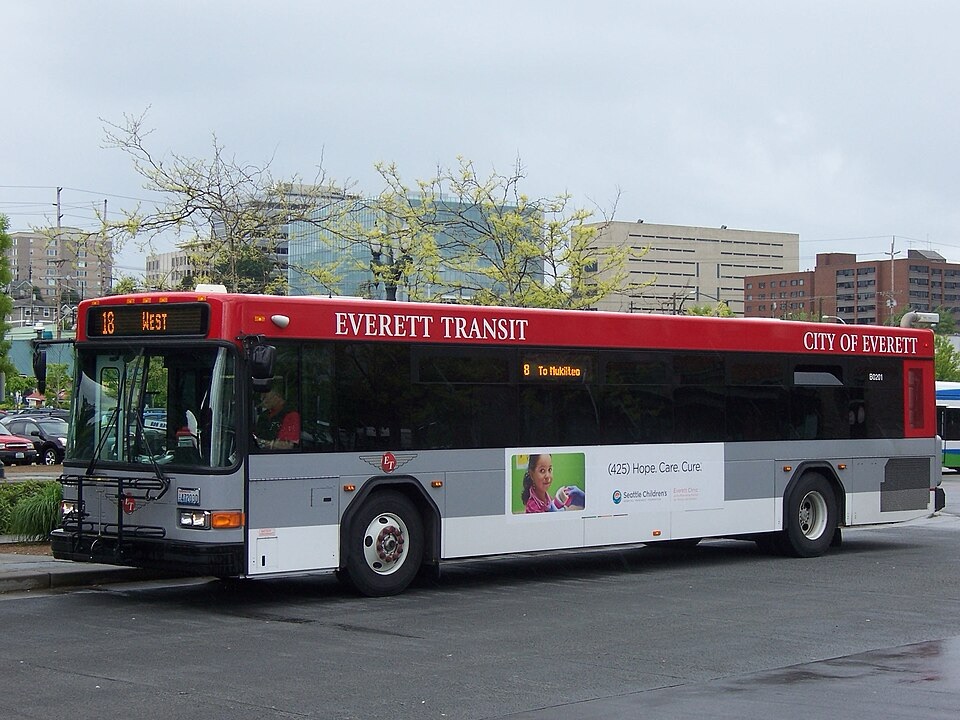

For the fifth time since 1988, the City of Everett and Community Transit have started to explore the potential for consolidating Snohomish County’s two transit agencies. The most recent attempt was a study that was done in 2022 & 2023 that produced a recommendation for the two agencies to merge, but talks between the city and CT stalled in early 2024. Now the discussion is back on with the goal of better incorporating Everett into the regional transit network; and it’s time for the city to modernize its transit system by merging with the county’s transit agency.
Everett’s buses typically operate on 45 minute headways, meaning that most routes only see one bus an hour. While a bus every 60 minutes is common Community Transit’s rural routes, it’s suburban routes typically average 30 minute headways during the weekdays. The roughly 104,000 residents of the county seat are poorly served by their existing bus network due to it’s lackluster funding – Everett’s bus system receives 0.6% of the city sales tax to cover it’s operations.
Community Transit receives 1.2% of the sales tax revenue in its service area.
And believe it, or not, that 0.6% is one of the major sticking points for the most vocal residents in the City of Everett. They’ve twisted themselves into knots over six pennies out of every $10 they spend in sales tax. For the average tax payer in the city, their annual tax burden will increase by $16.20 per year – the average Everett resident pays roughly $2,700 per year in sales tax. That’s a way more bearable cost increase than the way gas prices have skyrocketed due to President Trump’s illegal war in Iran and the subsequent partial closure of the Straight of Hormuz.
While the average individual won’t see a noticeable difference in their tax bill, the additional $32.40 (on average) that Community Transit will receive, per resident of Everett, means a jump of nearly $3.4 million in tax revenue. Some of that cost will go to paying the city for Everett Transit’s infrastructure (buses, transit centers, and maintenance barns), but the rest will go to integrating the city into CT’s county wide system.
Receive future updates from the Evergreen PI
Increasing the number of routes that connect Everett to its suburbs will help reduce the demands on the roads and highways leading to the city. It will also provide more frequent, more direct service than the city’s residents receive now.

The increase in service, more direct routes, and better funding for Community Transit’s are easy wins for the politicians to rally around. The fact that such a small, loud, and wrong segment of the city’s population has an out sized say in this process is (to be blunt) stupid.
The major costs in the integration will be replacing the aging bus fleet that city currently operates. Everett Transit was one of the last operators of the Orion V buses that were built in the early 2000’s, a bus that most agencies across the country had retired long before ET did in 2024. The agency has struggled to secure electrified buses, or just modern buses in general, and one of the first thing that Community Transit will have to do is retire the majority of the city’s bus stock to reduce fuel & maintenance cost. It will be a massive capital outlay that will cause outrage.
But it’s a cost that will be absolutely worth it to better integrate the county’s largest city into its transit network, especially since that would mean a dramatic increase in Community Transit’s funding.
More from the Evergreen Post Intelligencer
- Lynnwood is exploring options to protect residents, workers from wage theft

- M’s trade for Ward will add walks to a line up that needs them

- Everett City Council addressed affordable housing plans

- New Pac 12 will provide a challenge for WSU volleyball

- It’s the guns

- Streamlining of Lynnwood’s Critical Area Ordinance will ease development process
Discover more from Evergreen Post Intelligencer
Subscribe to get the latest posts sent to your email.
