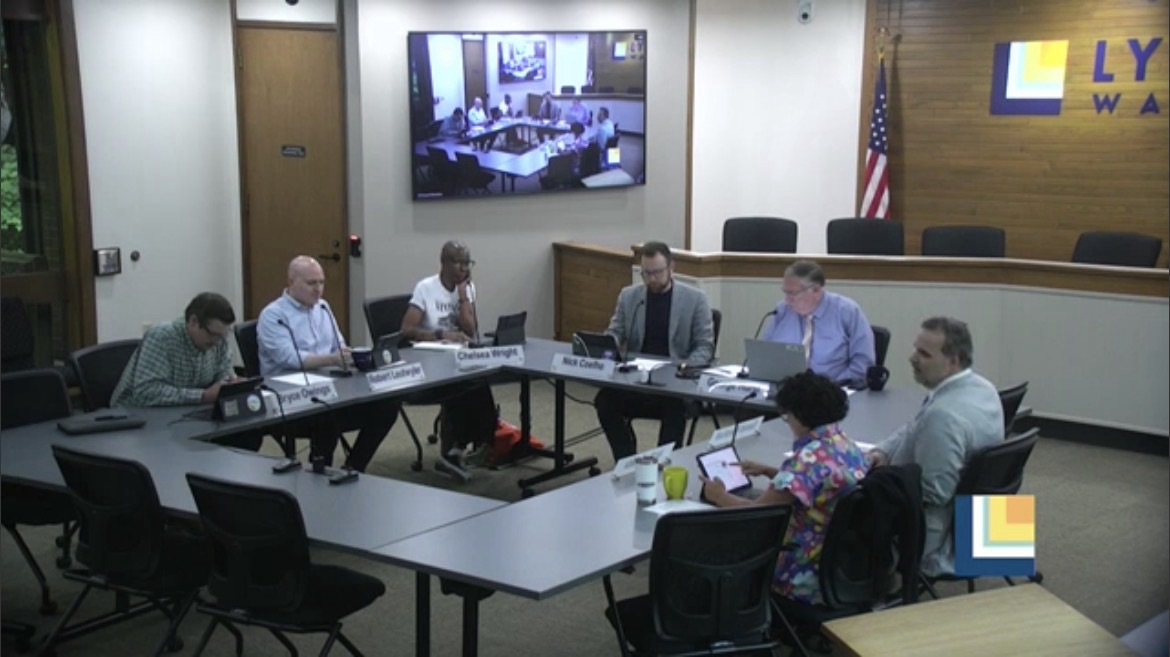

Community planning manager Karl Almgren and principle planner Rebecca Samy briefed the Lynnwood City Council on amendments to the city’s critical area ordinance in order to bring it into compliance with requirements from the state. The council also discussed their assignments with the city’s advisory boards and reviewed a draft vision zero ordinance.
According to Samy, the majority of the ordinance amendments are aimed at modernizing and streamlining the existing definitions and exemptions in order to simplify the process for residents, developers. These updates bring a lot of the permitting process for work in critical areas into alignment with the rest of the city’s permits, that way the process is more predictable for applicants. Another way these amendments make the process more predictable is that it brings specific standards to the city’s reasonable use applications process. That way if you have a property that is encumbered by critical areas, it’s easier for you to understand what would qualify for those exemptions, and simplifies the process for the hearing examiners who review these applications.
These proposed amendments also include a requirement for a map of critical areas that impact that property be included as part of the titles when there is a sale. This way the new owners are aware of the limitations and requirements necessary as part of redeveloping or remodeling their new property.
In response to a question asked by council member Isabel Mata, Samy reported that usually property owners come in to figure out if their properties are impacted by critical areas. Unfortunately, the city does not do the assessments to determine if a critical area impacts redevelopment plans. The qualified individuals are independent contractors that have to be paid for out of pocket; these individuals will frequently put together the mitigation/management plan if its found that there is a critical management area. Almgren also added that there are some developers who don’t do these assessments prior to applying for a permit and that can seriously hamper their projects if it’s found there is a critical area that impacts the property.
This conversation prompted a follow-up question from council president Nick Coelho because he wanted to know if there was a standardized effort across the region’s cities to preemptively identify these critical areas and handle those studies. Almgren replied that the indicator maps were developed for that purpose; he also added that if the city already has the information required on hand, they will not require the new developer/owner to preform the study.
A major concern for Coelho was how the city balanced its ecology needs versus meeting its preexisting housing production goals. The major issue confronting the city is that the existing code doesn’t do enough to protect critical areas and they need to expand those requirements to stay in compliance. But the planning department has included a expansion of the definition of reasonable use so that there can be an increase in those applications to help meet the city’s housing needs.
In terms of the city’s own projects, council member David Parshall was concerned about how these ordinance updates will impact the waste water treatment plant rebuild. Almgren advised that this will impact the plant and it’s entirely possible the plant will have to undergo the reasonable use permit application which will include a meeting with the hearing examiner to determine if the project qualifies for said exemption – the community justice center is an example of a city project that went in front of an examiner.
The major driver behind these amendments has been an update on regulations from the DoE and DFW because the best available science has made it clear that the prior regulations were inadequate to protect the state’s streams, slopes, wetlands, and other protected habitats. These critical area buffers are important to ensure that the functional and structural stability of these critical areas through the natural transition zones.
Receive future updates from the Evergreen PI
Council and advisory board discussion
Coelho also checked in on his fellow council members to see how their feeling about their liaison assignments with the advisory boards. One of the major issues that was raised by Mata and council member Bryce Owings was that they would have appreciated a clearer expectations of what is expected of them on certain boards; while most advisory bodies require them to mostly listen and only respond when spoken to, there are a few where liaisons are the chairs or they have a vote. It’s provided a few moments where they’ve had to rely on advice from the members of the boards. Council member Chelsea Wright talked about how it was a relatively smooth switch from being a commissioner on the Diversity, Equity, & Inclusion commission; but it’s been a bit difficult to not chime in at times.
Another, minor, issue that was raised was that it can be difficult to not bring up your own professional experience outside of city government when in these advisory body meetings. Council members are (primarily) at these meetings to help communicate the council’s goals and progress while also providing direct communication from these advisory bodies to the council.
There was a brief conversation that Coelho brought up potentially having written reports/memos to advise the rest of the council on each board or commission meeting. Most council members expressed that the verbal summaries worked best for them as the majority of these meetings were rather quick and not worth the time it would take to write up each memo. The exception that was brought up was unless there was something that immediately needed the council’s attention because it will generate questions from the public before the next council meeting; CM David Parshall highlighted a email he sent once he had been made aware of the HOV parking at the Lynnwood City Center Station parking garage.
Wright and council member Robert Leutwyler pointed out that if there’s something in these meetings that needs a written report then it’s worth having the boards and/or city staff put together a presentation to bring to council at their work sessions.
One recommended improvement came from Mata who explained that she’s working on sending council meeting agendas to the advisory boards she works on prior to their meetings. That way the board and commission members have an opportunity to review them and bring up any questions or concerns they have regarding how it could impact their advisory body at the meetings.
New items brought up in the work session
The only other new item brought up at the end of the work session was a draft vision zero ordinance by Leutwyler. He noted that it’s important for the council to codify its own vision zero ordinance to help address feedback from residents regarding traffic safety, sidewalks, and accessibility. As the City moves more towards a multi-modal model it’s critical that the council embrace reducing traffic deaths in the city to zero like other municipalities around the country and the region.
Leutwyler has forwarded the draft resolution to the mayor’s office for staff review because he believes it’s important to get their feedback. The council member also wanted it in front of the department heads so that they were aware of the action plan and required deliverables under the ordinance before Lynnwood starts its next biennial budget process.
While there was enthusiastic support from the council members that spoke, Leutwyler pointed out that there are concerns about how Lynnwood Police Department’s staffing shortage has reduced its traffic enforcement and that public works is also low on the funds needed for new street and sidewalk construction. These issues will impact the city’s ability to comply with the deliverables in the draft ordinance.
More from the Evergreen Post Intelligencer
- Sloppy defense doomed Cougars soccer to its first loss against Idaho since ’99

- Unincorporated Snohomish County to have $20 car tab in order to fund Public Works road repairs
- Lynnwood City Council approved the long-term water plan, critical area ordinance

- Snohomish County Council passed the 0.1% public safety sales tax
- LPD chief briefed the council on how the department will use the public safety grant, sales tax

- Union treasurer Burgess appointed to fill vacancy on Lynnwood PFD board
Discover more from Evergreen Post Intelligencer
Subscribe to get the latest posts sent to your email.
